
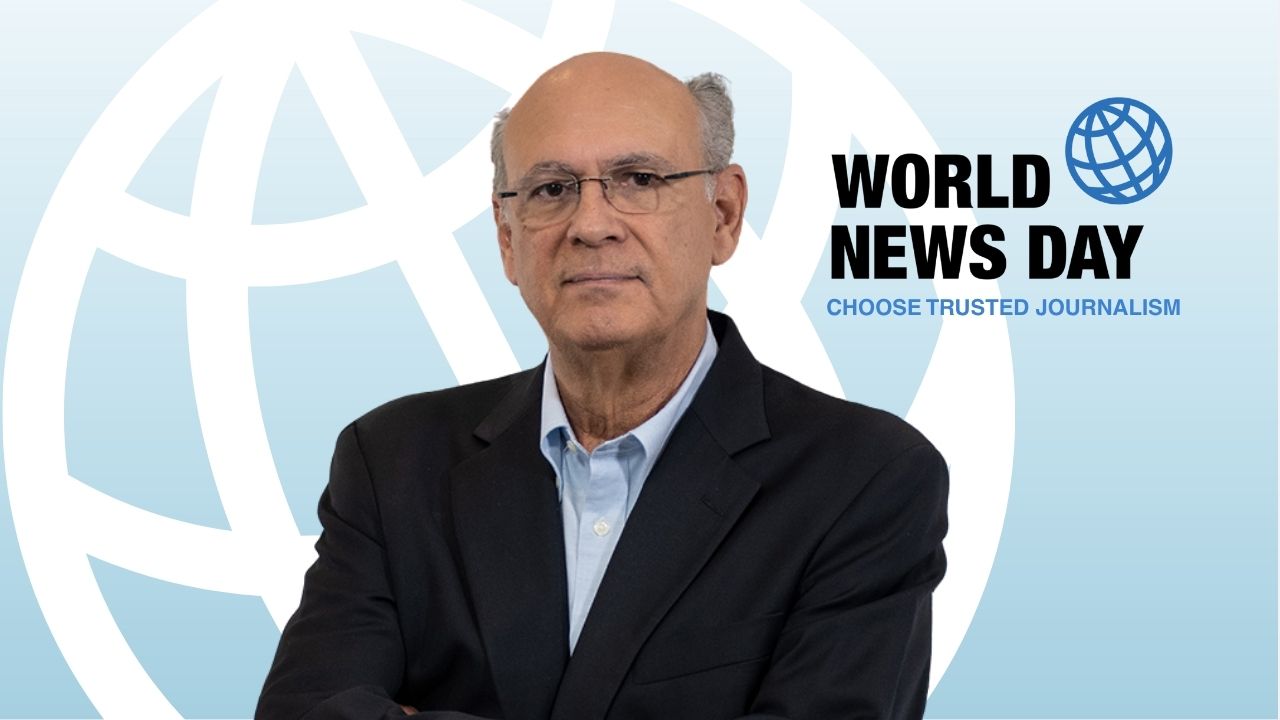
By Carlos Fernando Chamorro.
For Confidencial, reinventing journalism in exile is not a matter of aesthetic change; it is a strategy for resistance and survival to defeat censorship.
On July 19, 2026, dictator Daniel Ortega proclaimed that “there will never be elections in Nicaragua again.” The announcement sparked international outrage, although in reality, democratic elections in which political power could genuinely be contested had already been eliminated in practice more than a decade ago.
In 2021, for example, Ortega and his wife, “co-president” Rosario Murillo, secured another term without political competition, after outlawing political parties and imprisoning all seven opposition presidential hopefuls. What is new now is that Ortega is formalizing a one-party regime by enshrining the prohibition of democratic elections in the Constitution. This is merely the latest nail intended to seal the coffin of a nation and consolidate a totalitarian dynastic dictatorship.
Since 2018, after the police and paramilitary forces massacred demonstrators in nationwide protests demanding justice, democracy and free elections, leaving hundreds dead, a police state has been imposed that has eliminated all democratic freedoms. Without formally declaring a state of emergency, the dictatorship abolished freedom of assembly and movement, freedom of the press and freedom of expression, as well as electoral freedom; it imprisoned thousands of people.
After 2021, it unleashed a fierce campaign of persecution against civil society, including the Catholic Church, and shut down more than 5,500 civil society organizations, among them private universities, think tanks, medical associations, business organizations, and even the Missionaries of Charity, founded by Mother Teresa of Calcutta.
According to Reporters Without Borders’ World Press Freedom Index, in 2026 Nicaragua ranks last in Latin America and 168th out of 180 countries worldwide for press freedom, compared with Cuba at 160th, Venezuela at 159th, and El Salvador at 143rd. More than 200 journalists, along with entire newsrooms, have been forced into permanent exile in order to preserve their freedom and continue practicing journalism. The good news is that, despite the political persecution of the press, independent journalism in exile is overcoming censorship in Nicaragua.
Despite internet blockages and the criminalization of freedom of expression, Confidencial and other Nicaraguan digital media outlets operating from Costa Rica, the United States, Spain, and other countries continue to reach 50% of our audience inside Nicaragua.
However, practicing journalism in exile requires us to overcome three major challenges: first, protecting our sources and collaborators through secure communication channels; second, undertaking extraordinary verification efforts to provide reliable information without having journalists on the ground; and third, and no less importantly, ensuring the financial sustainability of our newsrooms under the most adverse and challenging conditions.
Over these last five years in exile, Confidencial has investigated dozens of emblematic cases of public corruption, state capture, human rights violations and the dismantling of democracy:
- “The Ortega-Murillo Family’s Network of Private Businesses Under State Protection,” “The Front Man Behind the Purchase of Disnorte and Dissur,” “Credicoop: The Regime’s Slush Fund,” and “The Dictators’ Grandson’s Parcel Delivery Business.”
- “The Machinery of Exile, Statelessness, and Crimes Against Humanity”, “The Persecution of the Catholic Church and the Confiscation of 39 Church Properties.”
- Rosario Murillo’s endless “purge” to decapitate “historic Sandinismo”and imprison operators loyal to Daniel Ortega.
- “Daniel Ortega’s Rings of Power,” and “Rosario Murillo’s New Power Operators.”
This is the journalism the dictatorship has criminalized and seeks to discredit as an attempted coup, simply for committing the supposed crime of informing, explaining, investigating, and telling the truth.
In July of this year, we celebrated the 30th anniversary of Confidencial, the news organization I founded in 1996, during Nicaragua’s democratic transition, and which for the past five years has confronted a dictatorship from exile. Over the past three decades, Confidencial and its journalists have been honored with professional recognition from international institutions that rank our work among the finest in Latin American journalism. But the most important recognition of all has been earning—and preserving—the trust of our audiences.
When no law or institution can protect Confidencial´s journalist amid the collapse of the rule of law, our only protection comes from the credibility of our journalism, from our reporters commitment to the truth –whatever the cost – and from the professional talent for continually reinventing journalism, even in exile.
For Confidencial, reinventing journalism is not a matter of aesthetic change; it is a strategy for resistance and survival. We reinvented ourselves after our newsroom was raided by the police and television censorship forced us off the air, becoming a fully digital news outlet and reconnecting with audiences who now find us on their mobile phones. We transformed the trauma of exile into a transnational newsroom that, despite the persecution of our journalists and sources, continues to report on Nicaragua, overcoming censorship and digital blockades.
Thanks to our audiences, our sources, and our journalists, we continue to defeat censorship under a dictatorship. As long as we continue to do more and better journalism, it will keep alive the flame of freedom of the press, as the first and the last of all freedoms.
Carlos Fernando Chamorro, Nicaraguan journalist, Golden Pen of Freedom Laureate 2024, Director of www.confidencial.digital
This opinion piece was commissioned to mark World News Day, on 28 September.
Free to republish or translate in full, provided translations remain faithful to the original meaning. Minor edits for length or house style are permitted on the same basis.