
By Lionel Barber.
In a radio address in December 1940, one year before the US entered World War II, Franklin D Roosevelt described America as “the arsenal of democracy”. Today, the guns are falling silent across the western front. Independent journalism, the lifeblood of an informed democracy, faces existential challenges, particularly in the US.
The threats are economic and technological, but they are also legal and political in nature. The second Trump administration is targeting news organisations aggressively, filing multi-billion law suits, hunting down sources through subpoenas, and waging a campaign of vilification against any reporter or editor who fails to toe the line.
There is scant precedent for this abuse of executive power. Not even Richard Nixon at the height of the Watergate scandal comes close. The assault on independent journalism is being mounted – in plain sight – using the awesome power of the Federal government. The courts, the last line of defence, have so far stood firm; but no one can be sure where the US Supreme Court, with its in-built long-term conservative majority, will come down in the final instance, should things head that way.
The bedrock Supreme Court decision defending freedom of the press in the US is New York Times Co v Sullivan (1964) which established that public officials cannot sue for defamation unless they prove “actual malice” – that is to say, the publisher knew the information was false or acted with reckless disregard.
A second foundational case is New York Times Co v United States (1971) – the so-called Pentagon Papers case in which the Court heavily restricted the government’s ability to exercise prior restraint or block the publication of classified defence information.
In both cases, the Supreme Court rulings set a high bar for the government to muzzle the media. But these enlightened rulings are relics of a bygone era. The Sixties and Seventies were marked by a profound distrust of the Federal government, exacerbated by the Vietnam War. The media’s exposure of the government’s lies used to justify the prosecution of that war lent newspapers, radio and television a new legitimacy.
Half a century on, public cynicism has spread to the media itself. Journalists rank below lawyers and estate agents, according to some surveys. Some of the mistrust may have been earned as a result of missteps and overreach; but that is the price of a free press. Today, when social media algorithms prioritize engagement which in turn rewards conflict and outrage, established news organisations find themselves branded as biased and disreputable. The Trump administration has been the most aggressive proponent and litigant in this media intimidation campaign.
In 2024, the Walt Disney Co agreed to pay $15m to the Trump presidential library and pay $1m in legal fees to settle a defamation suit brought against Disney’s ABC News subsidiary. Disney settled
after its star anchor – former Clinton administration communications director George Stephanopoulos – said Trump had been found “liable for rape”. (A New York judge had ruled that Trump was liable for “sexual assault”).
In 2025, Paramount agreed to pay the Trump presidential library $16m to settle a legal dispute over the editing of a CBS news programme featuring an interview with then Vice President Kamala Harris. Trump claimed the edit “tipped the scales” against him in the 2024 presidential campaign – despite the fact that he ended up a clear winner against Democratic candidate Harris.
Though Paramount admitted no guilt, it preferred to settle at a time when it needed the Federal government’s blessing for its planned multi-billion dollar merger with Skydance Media. Similarly, Walt Disney calculated that it was not worth testing a reasonable defence in court highlighting the fact that Trump’s notoriety made him a libel-proof plaintiff. In short, corporate interest has taken precedence over the constitutional principle of the freedom of the press.
There are noble exceptions. The New York Times, Wall Street Journal and the BBC have declined to settle multi-billion dollar lawsuits filed by President Trump. Indeed, the New York Times is suing the Pentagon over its decision to restrict access to reporters. The BBC is also contesting a $10bn defamation claim over a documentary on the January 6th riots. The case is due to be heard in a Florida court next year.
It is tempting to dismiss these fears as the product of a fevered liberal imagination. But I have been visiting the US regularly for the past 50 years. I was stationed as a foreign correspondent for the Financial Times for a decade, first in Washington and later in New York. I know the country (47 states and counting) and I consider dozens of American journalists to be personal friends. The threats to news organisations, large and small, constitute a clear and present danger.
America is the land of the First Amendment which guarantees freedom of religion, speech, the press, peaceful assembly and the right to petition the government. What happens in Washington does not stay in Washington. If America falls short in upholding the constitutional principle of a free press, others will act with greater impunity. The world will be a far darker place. Ends
Lionel Barber is an English journalist and former editor of the Financial Times. Until recently he was the co-host of the podcast Media Confidential.
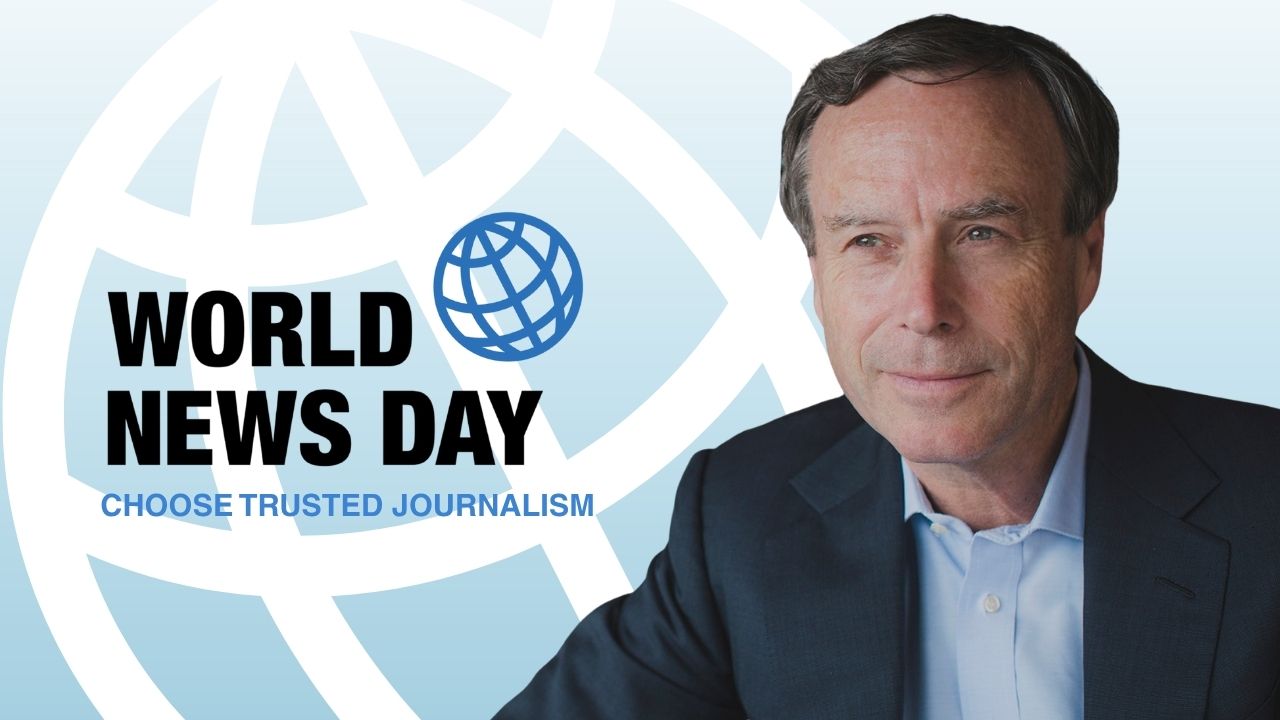
This opinion piece was commissioned to mark World News Day, on 28 September.
Free to republish or translate in full, provided translations remain faithful to the original meaning. Minor edits for length or house style are permitted on the same basis.