Category: Story

  • Warren Fernandez: In times of crisis and change, journalists play a critical role in society

    Warren Fernandez: In times of crisis and change, journalists play a critical role in society

    We live in bewildering times.

    War is raging in the heart of Europe, with the senseless fighting expected to make for a long, hard winter.

    Food and fuel prices have spiralled as a result, portending hunger and hardship, not least for vulnerable communities far flung from the conflict.

    Rising tensions in East Asia, amid the rivalry between the United States and China, make Taiwan a tinderbox that could flare up into a major confrontation that no one wants, nor may be able to control once set off.

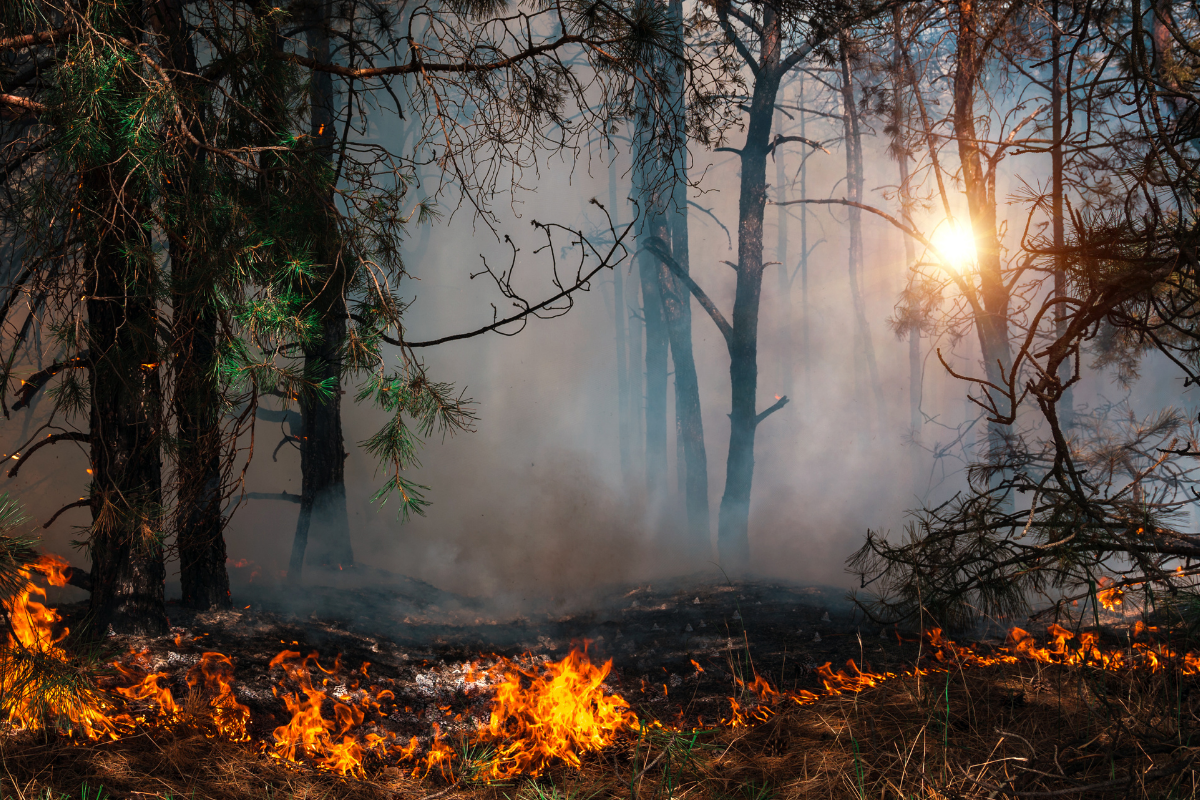
    Against this backdrop, the welter of reports on extreme weather – sweeping floods, roaring fires and devastating droughts – across the world, raise alarms that the climate crisis is getting harder to address by the day.

    Little wonder that audiences say they are exhausted by the news. People are anxious about present developments and where they might be heading.

    Fake news and misinformation add to the malaise. Some of this is spread deliberately, to sway public opinion, but much is also shared innocently, even unthinkingly, on social media platforms. Yet, curbs to check the former could constrain legitimate interaction.

    At times like these, World News Day, which we mark today, is of added significance. Today, we reflect on how journalism can make a difference, and why it is so important that it does. 

    Journalists in professional newsrooms have a vital role to play in safeguarding the well-being of the communities they serve. Our democracies depend on them doing so, effectively and purposefully.

    How best to do so?

    To my mind, we need to focus on delivering information, insight and inspiration.

    Credible information – fact-based, reliable, and timely – remains vital if we are to have reasoned, and reasonable, debates on how to tackle the challenges we face and figure out the ways forward.  While we might all be entitled to our opinions, we are not entitled to our own facts. Without any agreement on even basic facts, democratic discussions are reduced to a cacophony of assertion, where “the best lack all conviction, while the worst are full of passionate intensity”, as Yeats put it.

    Fact-based journalism requires painstaking legwork by reporters, relentless cross-checking and quality control by editors, as well as authoritative analysis and interpretation by seasoned commentators. 

    Not surprisingly, in this age of bewilderment, audiences are seeking out trusted voices, whom they can rely on to deliver reliable reports and insightful commentaries. Multiple studies show that apart from the news, audiences value explainers, backgrounders, analysis – whether online, on video or through newsletters.

    Beyond this, faced with relentless waves of doom and gloom, people also want inspiration. They want to hear about possible solutions to the problems at hand, as well as of those who are stepping up to address them. So too content that seeks to shine a light in dark corners, and give voice to communities and subjects that are more often neglected or ignored.

    Allow me to cite one example: a video series, titled ‘Invisible Asia’, in which my colleagues from The Straits Times cast a spotlight on people living in the shadows of their societies, largely unseen and unheard.

    These include the ostracized burakumin or ‘untouchables’ in Japan, to the hardships endured by sewer cleaners in modern-day India and China’s silent army of odd-job migrant labourers, as well as the sense of isolation faced by unsuspecting brides drawn from abroad to marry men in Singapore.    

    The series was awarded the top prize for investigative/enterprise video journalism at the global Editor & Publisher EPPY Awards 2021.

    Many more examples of how journalism has made an impact can be found on the World News Day website. The old newsroom adage, “show, don’t tell”, applies here.

    At a time when Orwellian “War-is-Peace”, Freedom-is-slavery” doublespeak and state-sponsored misinformation campaigns are rampant, it seems fitting to turn to that  journalistic sage, George Orwell, for inspiration on World News Day.

    In his 1946 essay, Why I Write, Orwell argued that all writing, but perhaps especially journalistic endeavours, has a political purpose, as well as a quest for telling a good story well.

    His words ring true today. He wrote: “My starting point is always a feeling of partisanship, a sense of injustice.

    “When I sit down to write a book, I do not say to myself, ‘I am going to produce a work of art’. I write it because there is some lie that I want to expose, some fact to which I want to draw attention, and my initial concern is to get a hearing.

    “But I could not do the work of writing a book, or even a long magazine article, if it were not also an aesthetic experience… I am not able, and do not want, completely to abandon the world view that I acquired in childhood. So long as I remain alive and well I shall continue to feel strongly about prose style… 

    “The job is to reconcile my ingrained likes and dislikes with the essentially public, non-individual activities that this age forces on all of us.”

    So it was, and so it remains, especially today.

    About the author

    Warren Fernandez is President of the World Editors Forum, a network of editors under the World Association of News Publishers, and also Editor-in-Chief of The Straits Times in Singapore.

  • Kathy English: Journalists must explain our work to our readers

    Kathy English: Journalists must explain our work to our readers

    Journalists do our jobs in the belief that journalism – at its best – matters to citizens the world over.

    As journalists around the globe unite on this World News Day to proclaim publicly that journalism makes a difference we must not turn away from the discouraging fact – as stated in the 2022 Reuters Institute Digital News Report – that, “the connection between journalism and the public may be fraying”.

    Journalists believe wholeheartedly that journalism matters. But as the annual report on global digital news consumption published in June by Oxford University’s Reuters Institute for the Study of Journalism makes clear, the public’s trust and interest in news is falling, with an alarming number of people deciding to avoid news altogether.

    Today is a day to celebrate journalism. But it is also a time for the global journalism community to aim to create deeper public understanding of the role that journalists play in providing trustworthy news and information that serves citizens and democracy. 

    Having served as public editor of Canada’s Toronto Star for 13 years, a role in which I had opportunity to connect and communicate with many thousands of readers expressing concerns and complaints about the Star’s journalism, I came to know that journalists must never take it for granted that our news audiences get what we do and why we do it.

    We must explain ourselves and our work to you. We must be transparent and accountable about our methods, mission and purpose. To be trusted, we must be trustworthy.

    Trustworthy journalism is news and information that is accountable, accurate, fair, and produced in line with journalism’s highest ethical standards. That means correcting our mistakes when we err.  It means making clear distinctions between fact and opinion. It demands centering diversity and inclusion in the subjects and sources on which we shine journalism’s light and in the corps of journalists who report the news.

    World News Day is intended as an important reminder to the public of why journalism – at its best – matters. As journalists we have an obligation to explain to you the ethical standards that distinguish responsible journalism in the public interest from much of the noise of the net.

    In a world of viral misinformation and outright lies, a world in which younger audiences increasingly turn to social media as their main source of news, public understanding that journalism at its best abides by and is accountable to journalistic standards matters much.

    I know first hand the vital importance of engaging with our news audiences, of seeking to create greater public understanding of journalism’s standards and the distinction between misinformation and real news. I believe that when journalists explain our work to you and hold ourselves accountable to our audiences, we can enhance trust and interest in journalism.

    Indeed, to mark World News Day in 2019, I asked Toronto Star readers for their perspectives on why #Journalism Matters to them. Several hundred readers responded, most showing great appreciation for fact-based journalism that aspires to live up to journalism’s highest standards. 

    “In this age of the public’s acceptance of lies and misinformation coming at us from every direction we must be able to rely on at least one institution that respects the truth, forces public figures to answer to those who serve them and holds commitment to the public good as something to strive for,” wrote reader Leo Keeler.

    Reader Devan Munn’s words spoke straight to the heart of the universal message World News Day seeks to communicate to global news audiences. 

    ”It is my conviction that in a world without fact-based reporting, the powerless will have no voice, the powerful will not be held accountable and the public will never know the difference,” Munn said.

    Journalism, at its best, matters to all of us throughout the world. Today, and every day.

    About the author

    Kathy English, chair of the board of the Canadian Journalism Foundation and former public editor of the Toronto Star, consults with newsrooms on journalistic trust and transparency standards.

  • World News Day Founder: Climate change has long been a political football, but facts are sacred and cannot be bent

    World News Day Founder: Climate change has long been a political football, but facts are sacred and cannot be bent

    A record number of newsrooms across the world have joined this year’s World News Day, a global day of action to promote the importance of fact-based journalism.

    This year’s focus is a singular one, climate change. Wherever you are in the world, the climate is changing. Canada, where I live, is a country perhaps best known for ice hockey and the gift of our natural bounty. We possess a third of the world’s fresh water, mountains and three oceans to our west, north and east.

    Our giant Prairie farms make Canada a world leader in the production and export of crops such as lentils, beans and chickpeas. Canada exports those crops to more than 120 countries, including refugee camps in the Middle East at cost basis.

    But against such luck of geography, new challenges are being thrown up.

    In British Columbia, Canada’s most western province, more than 600 people died from heat related illnesses this past summer. In the town of Lytton, B.C., a temperature of 49.6C was recorded. That comes in at 121.3F. This is the highest temperature ever recorded north of 45 degrees latitude.

    Newsrooms around the world recognize that the news cycle forces journalists to confront such dramatic moments. That is why more reporters are being hired to focus exclusively on the environment.

    Climate change has long been a political football, to be kicked around by different viewpoints. That is as may be, but while everyone is entitled to an opinion, facts are sacred and cannot be bent.

    Instead of polarisation, fact-based journalism offers something much more precious. It offers solutions. And that is the intention of World News Day – to showcase our audiences, and what journalism is doing to respond to their demands.

    An inherent advantage of quality journalism is that it hears and reports from all sides, including those who deny there is any climate change taking place. Such an exchange creates a market for ideas that provide a key benefit to society’s understandings of the issues that need to be confronted.

    More than policymakers so often gripped by short-term domestic challenges, journalism offers the arena for long-term approaches, and for voices, especially the young, who are so moved by their environmental concerns.

    The largest act of civil disobedience in Canada’s history is ongoing on Vancouver Island with more than 900 people arrested as protesters, many of them in their twenties, are fighting to protect old growth forest. No trees, no future is one of their slogans. The deep-seated, emotional defence of our land is a powerful force that news pages need to keep on the front pages.

    Our reader research tells us that environment coverage is as important as health reporting, even during the global Covid-19 pandemic. It is in the interests of all countries to work together to reduce emissions and support radical industrial changes that will help the entire human race.

    That is why journalists in more than 460 newsrooms across six continents have joined in this year’s initiative.

    Please join the discussion on this website and on social media at #WorldNewsDay and #JournalismMatters to help us help everyone to make the planet a better place.

    David Walmsley is the founder of World News Day, and the editor-in-chief of The Globe and Mail, Canada.

  • Covid crisis points to climate challenge ahead

    Covid crisis points to climate challenge ahead

    Getting to school as a boy growing up in Singapore in the 1970s could be soggy affair at times.

    Tropical downpours overwhelmed drainage systems, leaving parts of the island impassable. Students braved the rains and rising waters, turning up wet and bedraggled, if they made it at all.

    Thankfully, this became a thing of the past by the late 1980s. Massive flood alleviation efforts caused this story to recede from newspaper front pages, as a modern city-state emerged.

    Yet, decades on, we seem to be heading back to the future.

    Severe storms are now becoming more frequent.

    The result: last month, pictures and videos of upscale districts in central Singapore inundated hit the headlines again, causing much consternation.

    But even as the authorities rushed to unveil plans in response to the public concerns, a minister warned that as intense rainfall was becoming more common with global warming, people might have to get used to flash floods from time to time.

    Rising sea levels is an existential issue for this low-lying island, about a third of which is less than 5 metres above the mean sea level. The country’s Prime Minister Lee Hsien Loong has estimated that over $100 billion (Singapore dollars) might be needed over the next decades to tackle the rising tides caused by warming seas and melting ice sheets.

    But Singapore is not alone. New York City declared a “flash flood emergency” earlier this month after record levels of rain in the wake of Hurricane Ida.

    Over 300 people were killed in China’s Henan province in August, when a year’s worth of rain fell in three days, leaving many trapped in underground train carriages and road tunnels, as water levels rose.

    Devastating floods in Germany and Belgium, droughts in Brazil, heatwaves in India, Australia, and the Pacific Northwest of the United States, wild fires in California and Canada, as well as across the Mediterranean and Amazon regions  – such extreme weather events, once the stuff of movies, have been playing out across the planet this year.

    Get used to it, say the climate scientists, for these are signs of what’s to come.

    The United Nation’s Intergovernmental Panel on Climate Change (IPCC) chairman Hoesung Lee, summed up the grim scenario this way: “It is indisputable that human activities are causing climate change and making extreme weather more frequent and severe.”

    “It also shows that climate change is affecting every region on our planet,” he said, following a UN report in August, dubbed a Code Red warning for humanity and an urgent call to action.

    Yet, who can blame a weary world for being distracted, with so many countries still in the grip of a rampaging virus that refuses to yield.

    But, as the IPCC’s Dr Lee rightly notes, the Covid-19 pandemic is a “foretaste of what climate change could do to our society, to nature and our lives”.

    “Both climate change and Covid-19 have shown us the risks of an unthinking and rapacious approach to nature and its resources.”

    Lamentably, while the world’s scientists were quick to step up to the Covid-19 challenge, delivering effective vaccines, efforts to curb the outbreak have been hampered by populist politicians, global inequalities, and a pandemic of misinformation.

    Divisions and delays have compounded the challenge: the virus has continued to spread, mutate, and unleash new waves of infections.

    The Covid-19 experience has made plain how difficult it will be to forge a global consensus on tackling the climate crisis.

    The signs of this looming challenge, and the science behind it, grow clearer by the day. But here too, politics, inequality and misinformation confound concerted action.

    This is where professional newsrooms have an important role to play.

    And it is why this year’s World News Day on September 28, will focus on the climate crisis.

    Some 500 newsrooms from around the world will come together to tell the story of how climate change is already impacting the lives and livelihoods of communities, and how they are grappling with it.

    Professional newsrooms, with resources and expertise, are best placed to tell these stories in clear, compelling and credible ways.

    One of the best examples of this, in my view, is the recent BBC documentary, The Truth about Climate Change.  In it,  environmentalist David Attenborough sums up the facts and makes the case for action, in his friendly-scientist-you-can-trust way.

    “In 4,500 million years, our world has gone through many natural changes. Now, it is changing once again,” he warned.

    “But this time, we ourselves are contributing to those changes. We are causing the world to heat up.

    “If we continue to behave as we are doing, our children and grandchildren will have to deal with potentially catastrophic changes.

    “The vast forests of the Amazon could wither and burn. The oceans could turn acid, destroying much of the life they presently contain.

    “The Arctic could be transformed. Its ice could melt and its most famous animals vanish forever.

    “Rising tides could cast millions of people adrift. Many of our coastal cities could be flooded, and drowned.”

    There is still time to act if the world is to minimise these changes, he adds. But time, that most non-renewable of resources, is running out.

    Sir David, 93, has been making such pleas for some time.

    Now is the time to hear him, and heed.

    Warren Fernandez is Editor-in-Chief of The Straits Times, the leading English language news title in Singapore, and President of the World Editors Forum (WEF). 

  • Covering climate change requires newsroom change

    Covering climate change requires newsroom change

    News organisations around the world are beginning to intensify their reporting on climate change. With World News Day coming up on September 28th, this is an opportunity to look at how newsrooms navigate the operational and ethical issues that can come up in the process of expanding their climate journalism.

    In my interviews and an additional survey that I conducted amongst climate reporters, science editors, news editors and editors-in-chief from Asia, Africa, the Americas and Europe, more than two-thirds of all respondents confirmed plans to increase their coverage of the climate crisis.

    Newsrooms that expand their climate reporting typically choose one of the following three organisational structures to achieve their goal: They either increase the budget of their existing science desk or set up a whole new climate desk which then operates in parallel with their existing science desk. A third and less common approach is to neither expand existing science desks nor to launch a new climate desk, but to take an interdisciplinary ‘climate hub’ approach with existing staff.

    Newsrooms that choose the climate hub approach make sure that interested editors from all their verticals, such as their politics, science, economics, culture or lifestyle desk, meet once or twice a week to discuss and better coordinate their planned stories that touch upon aspects of the climate crisis.

    All three organisational models have their strengths and weaknesses. The hub approach is no substitute for having science journalists and climate experts in a newsroom and it requires a highly collaborative newsroom culture for it to succeed. A strong advantage of the climate hub approach is that it can accelerate a news organisation’s transformation towards integrating the climate aspects of any story as naturally as they would include that same story’s financial aspects, no matter which vertical it appears in.

    The advantage of a new climate desk then is that it allows for the creation of a new team that has a wider range of expertise than a typical science desk, such as in-depth knowledge of climate policy, of the energy industries, of highly climate-relevant industries such as agriculture, construction or textiles or also of organisational psychology as an important aspect of large-scale societal change.

    Compared to the other two approaches, launching a new climate desk tends to have greater PR value for a news organisation if it wants to signal a change in editorial priorities to its potential subscribers and advertisers.

    The potential downside of establishing a dedicated climate desk is the internal friction this can create with the staff of an already existing science desk that has been covering climate change in the years past and often with insufficient budgets.

    The approach of simply expanding the staff and budget of an existing science desk avoids such friction. It is also easier to implement and it minimises the risk of publishing stories that contain scientific inaccuracies. The risk of this more traditional approach, though, is that an expanded science desk can easily slow down a newsroom’s learning process of increasing everyone’s basic climate literacy and the wider newsroom staff’s interest in what is not only a science topic but a systemic issue.

    And, as is so often the case with newsroom changes, all three organisational models completely depend on the engagement and commitment of a newsroom’s senior leadership team to succeed. As long as the chief editor’s team views climate change as a topic or vertical and not as a systemic issue across all desks, climate editors and reporters will struggle to have much of an impact.

    This is why the German climate journalist Sara Schurmann, who is currently advising Germany’s public broadcaster SWR on its climate journalism, has suggested a fourth tactic which is to install a temporary ‘managing climate editor’ as part of the chief editor’s team.

    This senior specialist would then take part in all relevant editorial meetings of a news organisation so she or he can make other editors aware of the climate aspects of a story and ensure team collaboration where that is useful.

    In my research interviews, I not only asked about a news organisation’s plans for expanding their climate reporting but also what the typical obstacles and challenges were for them in achieving that goal.

    Many of the newsroom challenges that were then mentioned to me, first in these personal conversations and then again in my survey, are operational challenges, such as the need for climate literacy training in the newsroom, the challenges of dealing with disinformation campaigns and trolls, or the issue that newsdesk editors sometimes hesitate to give a climate change story premium placement on their news agenda for fear that it may not interest their audiences enough.

    Amongst the more cultural obstacles that were mentioned to me, the journalists’ fear of being accused of activism if they start covering the climate crisis more frequently than before was the most prominent one.

    What struck me here was how this challenge of delineating between journalism and activism was a recurring theme in my conversations with journalists where I had promised them confidentiality. Later on, though, in the written survey to which about 70 international journalists replied, many of them in senior leadership positions, this challenge of not wanting to be accused of activism was only rated as a minor issue by them.

    There is recent anecdotal evidence, though, that reporting on climate change is still widely assumed to be the domain of more left or liberal publications. When the UK’s conservative dailies ‘The Sun’ and ‘The Daily Express’ both launched climate-themed campaigns earlier this year, the British trade publication ‘Press Gazette’ still called that ‘surprising’. The editors of both dailies equally felt a need to explain their change of mind.

    And when two German TV meteorologists started mentioning climate change in their weather updates, something that is common practice in Australian television, the conservative daily ‘BILD’ promptly accused them of activism in support of Germany’s Green party, simply by mentioning climate change.

    Today’s editorial codes of ethics of leading news organisations, such as the Financial Times,  The New York Times, The Wall Street Journal, NPR, The Guardian or the one I initiated myself, years back as editor-in-chief of ZEIT ONLINE, are not very clear on that question of how to delineate between activism and journalism.

    Their various statements on impartiality, transparency, accuracy or the protection of sources are fairly instructive for the individual stories that a news organisation has already decided to pursue but not as much on the question of why a topic gets covered or not. One of the most effective and least provable forms of editorial activism, of course, does not manifest itself in the topics and events a news organisations reports on but in those it chooses to ignore.

    In the early 2010s, when bloggers became more effective in highlighting editorial conflicts of interest and in holding professional journalists to account, many news organisations responded by clarifying their definitions of what constitutes a conflict of interest for their journalists.

    Naturally, different publications ended up with different definitions. Financial publications, for instance, often apply stricter criteria on reporting about a publicly-listed company of which a journalist’s relative owns shares than many general interest news publications do. Across the industry, though, leading news organisations have mostly dealt with defining what constitutes a conflict of interest, sometimes against the resistance of their staff.

    Given the foreseeable battles over climate policy in many countries, newsroom managers would do their staff and their journalism a favour if they now reviewed their codes of ethics or editorial codes of conduct once more, this time to make sure there is at least a shared understanding in their newsroom of what is activism and, more importantly, of what isn’t activism in covering the accelerating climate crisis.

    In many news organisations, it is the younger journalists that care most passionately about the climate crisis. They deserve the ethical clarity and operational support of their senior management in navigating these questions.

    This piece was produced for the World Editors Forum as part of the World News Day initiative

    The media manager and journalist Wolfgang Blau is taking a year off to study the challenges and potential of journalism in covering the climate crisis. He is currently a Visiting Research Fellow at the Reuters Institute for the Study of Journalism at Oxford University. Before that, he was Global Chief Operating Officer of Condé Nast, Executive Director of Digital Strategy at The Guardian and Editor-in-Chief of Germany’s Zeit Online, a position that won him Germany’s ‘Chief Editor of the Year’-Award. www.wolfgangblau.com

    Wolfgang will speak at the World Editors Forum’s ‘World News Media Congress’ on December 1st. 

    Photo by Arlington Research on Unsplash

  • Climate news is paralysing people. But this can change

    Climate news is paralysing people. But this can change

    Luba Kassova is the author of “The Missing Perspectives of Women in News” and Director at audience strategy consultancy AKAS, which works on social justice issues.

    No story is more challenging to cover than climate change. No story reflects the complexity of human nature, of societal and international power structures more viscerally than climate change. It demands action like no other story yet is beset by biases that conspire against action. It cries out for hope but generates denial, anxiety and despondence. No previous generation has believed in a future worse than the past. The first major study of climate anxiety among young people, released this month, indicates the profound tensions between young people’s zest for life and their feelings of fear, despair, hopelessness and betrayal. In the words of one young participant: “I don’t want to die. But I don’t want to live in a world that doesn’t care about children and animals.” 

    The climate crisis generates dangerous, incongruent gaps between what we think, and how we feel and act. This is evident across governments, media, businesses and individuals, all of whom acknowledge the existential dangers of climate change yet fail to act effectively, if at all. Global news coverage is often more part of the problem than the solution, publishing stories that inadvertently promote inaction.  This coverage can and must change. 

    Public understanding is unquestionably growing: recent research from Pew revealed that 72% of people in 17 countries spanning three continents are very or somewhat concerned that climate change will harm them personally at some point in the future

    Yet this growing recognition of the seriousness of climate change is still not translating into effective engagement. 90% of respondents in a recent survey by AKAS in Australia, Canada, the UK and the US stated that they did not follow the climate change story very closely while global Google searches for “climate change” peaked 14 years ago. In the last five years, people have been three times more likely to search for “Marvel comics” than “climate change”.

    This gap between knowledge and action can be partly explained by feelings of disempowerment and anxiety. Research argues that to change behaviour, people need to feel emotionally activated. However, most news coverage evokes deactivating emotions, leading to paralysis. On 9th August, analysis revealed that 79% of the news headlines about the UN’s Intergovernmental Panel on Climate Change (IPCC) report on 25 of the most linked-to online news sites globally evoked worry, fear, hopelessness and/or a feeling of being overwhelmed, 10% had a neutral undertone, 6% evoked some hope and only 5% alluded to a solution. 

    Climate change can also activate various behavioural biases which compound the tendency towards inaction. Present bias inflates the value of small rewards in the present while discounting big rewards or threats in the future. When asked to rank topics of concern in their country, publics globally prioritised eight issues ahead of climate change, including Covid-19, unemployment and social inequality. Analysis of GDELT’s global online news database reveals that since 2017, the terms “health”, “economy” and “education” have featured 16, 7 and 6 times more frequently than “climate change”, which appeared in just 0.9% of its 750 million news stories.

    Risk aversion similarly inhibits action on climate change – people choose to avoid small but certain losses in living standards now, risking potentially huge but uncertain losses in the future. Meanwhile, the so-called ostrich effect prevents people from absorbing information effectively: they bury their heads in the sand in response to the deeply frightening climate change messages that news media routinely amplifies.

    Our collective preservation has never depended so profoundly on the synchronous action of intergovernmental organisations, governments, businesses, the news media and individuals. News media could play its part by ceasing to deactivate audiences, changing the tone of its coverage to balance the pessimism generated by the scale of the problem with the optimism offered by the existing solutions.

    These adjustments by journalists would help:

    1. Make climate change coverage relevant to audiences’ lives and validate their emotions. Linking climate change coverage with higher interest topics (e.g. employment, welfare, social equality, security, immigration and health) will help mitigate present bias. Audiences also feel heard when journalists report on their concerns and emotions.
    2. Balance the problem with solutions to encourage engagement and empowerment. Overwhelmingly negative coverage of the climate story risks audiences switching off.  It’s important to attempt to pair up facts that inevitably evoke strong deactivating emotions with solutions that evoke hope.
    3. Ensure that some headlines are hopeful and empowering, rather than calamitous. Calamitous headlines strip individuals of agency, leaving them feeling overwhelmed or apathetic. Audiences need headlines that ignite their belief that they can make a difference. Some achieve this already: “A Hotter Future is certain, Climate Panel Warns, but How Hot is Up to US”, “14 ways to fight the climate crisis after ‘Code Red’ IPCC report” or “The IPCC report is a massive alert that the time for climate action is nearly gone, but crucially not gone yet”.
    4. Shift from being guardians of truth to being change makers; in the words of Keith Hammond, president of the Solutions Journalism Network, from being watch dogs to guide dogs. This requires a re-examination of what it means to be a journalist in the era of climate change.
    5. Use learnings from the pandemic and the 2009 financial crisis to accelerate action on climate. Draw parallels with the damage caused by discounting the threat of these arguably preventable previous crises until it was too late.
    6. Train journalists to embrace data because soon the climate story will permeate every aspect of our lives. A deeper understanding of climate science is also crucial if journalists are to generate independent narratives that hold those in power to account. An inability to interrogate the data risks skirting around the edges of the story, gradually losing credibility and trust.
    7. Remember that journalists are human too: they fall prey to the same biases as everyone else, feeling overwhelmed, disempowered and fearful for their children’s future.  Bias-awareness training and ongoing mental health support will mitigate these challenges.

    Younger generations are telling us that we are failing them on climate change. The news industry is one of very few sectors that hold a key to positive change at scale. Now more than ever journalists have an opportunity to change the course of history. Will they be forgiven if they don’t grasp it?

    This story has been shared as part of World News Day 2021, a global campaign to highlight the critical role of fact-based journalism in providing trustworthy news and information in service of humanity. #JournalismMatters.

  • Climate change is the front-page story of the rest of our lives

    Climate change is the front-page story of the rest of our lives

    David Callaway is founder of Callaway Climate Insights, a former editor of USA Today, and former president of the World Editors Forum.

    San Francisco – The text from my local police department came without warning or detail – mandatory evacuation. A fire had started in the hill above my neighborhood minutes ago, and suddenly, early on a sunny Thursday morning last month, we were told to run for our lives. 

    Minutes later, another text. Fire out. To be honest, we hadn’t even had time to grab a bag. We were lucky. 

    Climate change is the story of displacement and migration. Tens of thousands of people in the last few years around the world have lost their homes and their loved ones to global warming. Wildfires in Australia and the Western United States. Killer floods in China and Germany. Heatwaves across Europe and Canada. Stronger hurricanes and typhoons. Longer droughts and water running out, even as rising seas threaten to drown coastlines and island nations.  

    Like it or not, climate change will be the front-page story for the rest of our lives. For journalists, the challenge of telling that story with facts and fairness is paramount to the global effort required to transition our economies from fossil fuels to renewable energy. 

    As climate disasters have soared in the last few years, so has news coverage, reflecting a public interest that has begun to manifest itself in national elections as well as protests across the globe. Large news organizations such as The Guardian, The Washington Post and the South China Morning Post have built dedicated teams to the climate beat. 

    Smaller, start-up news companies have formed to focus solely on the science, politics, and business of global warming. Climate Home News in the UK. Eco-Business.com in Singapore. Inside Climate News in the U.S. After 40 years in major newsrooms around the world, I’ve even started my own newsletter, Callaway Climate Insights, to focus on investing in climate solutions, from electric vehicles to off-shore wind. 

    For all the activity, the news world’s attention to climate change is still in its infancy. Politicians still argue that it is a myth. People distrust the science, as we’ve seen with Covid. Some claim it’s advocacy journalism. Only when global warming comes to their doors do many people react. 

    There has never been a greater need for journalism that has impact. Such as the Wall Street Journal coverage of the California fires two years ago, which found that the Paradise fire that destroyed a town and killed dozens was caused by the downed power line of public utility PG&E. 

    Or the Guardian’s new series this summer, Climate Crimes, which covers the role Big Oil has played in polluting the atmosphere. Or the Washington Post, which won a Pulitzer Prize for a series on what would happen to the world if it exceeded the temperatures scientists said we must stay below. 

    Or more recently, the decision by Britain’s Channel 4 to broadcast a controversial videotape of an Exxon lobbyist boasting that the company’s agreement to discuss a tax on carbon emissions was simply a stalling tactic. All forced attention to the issue. 

    Behind the headlines, a wall of money is beginning to emerge for climate solutions from investors big and small who see the threat, and the opportunity, of the next few decades. More than $5 trillion has been invested in sustainable assets since 2018, according to the Global Sustainable Investment Alliance.

    That money is looking for entrepreneurs who can find ways to create networks of charging stations across the world for electric vehicles. Or remove plastics from the ocean. Or suck carbon from the atmosphere and bury it deep in the earth. 

    Companies in battery technology, off-show wind farms, solar products, and plant-based food are going public and rewarding investors for their support. The stories of these companies, the winners and the losers, and which ones will be the next global leaders as the world begins to shift, will be written by journalists. 

    In less than six weeks, in early November, the United Nations will convene a global summit called COP26 in Glasgow, Scotland, which is being billed as the last chance for the world’s countries to agree on climate goals. Those include eliminating coal usage, adapting electric vehicles worldwide, and support for poorer countries most affected by the ravages of global warming. 

    Democratic governments respond to the will of their people, which will need to hold them to account in the coming decades to make the changes so important to mitigating the worst of global warming yet to come. That will is reflected and often can be raised by journalists telling important stories, with facts and science. 

    How news organizations respond to this challenge will in no small part dictate the credibility they are given by the free world in coming years as the climate emergency comes to all of our doors.

    This story, written by David Callaway, the founder of Callaway Climate Insights, has been shared as part of World News Day 2021, a global campaign to highlight the critical role of fact-based journalism in providing trustworthy news and information in service of humanity. #JournalismMatters.